Merging Two Legacy Fleet Management Platforms into One Modern Product
5 min read
Project Summary
A major North American telecom company hired Block Zero to merge two legacy fleet management platforms into one unified product.
In Phase 1 of the project, I was put in charge of the foundational UX strategy and worked across three levels — (1) leading 4 months of planning, (2) managing the project day-to-day, and (3) contributing to detailed design work. This work resulted in a clear roadmap for the next production phase.
In Phase 2, I was part of a core product design team, working closely with the product owner and developers to deliver a fully designed MVP.
Result
Product & UX Foundation for the Merge
Fleet Management Platform MVP
Role
Design Lead (Phase 1),
Product Designer (Phase 2)
Timeline
Sep 2024 - May 2025
Team
Team of UX/UI Designers, Developers, Product Owner
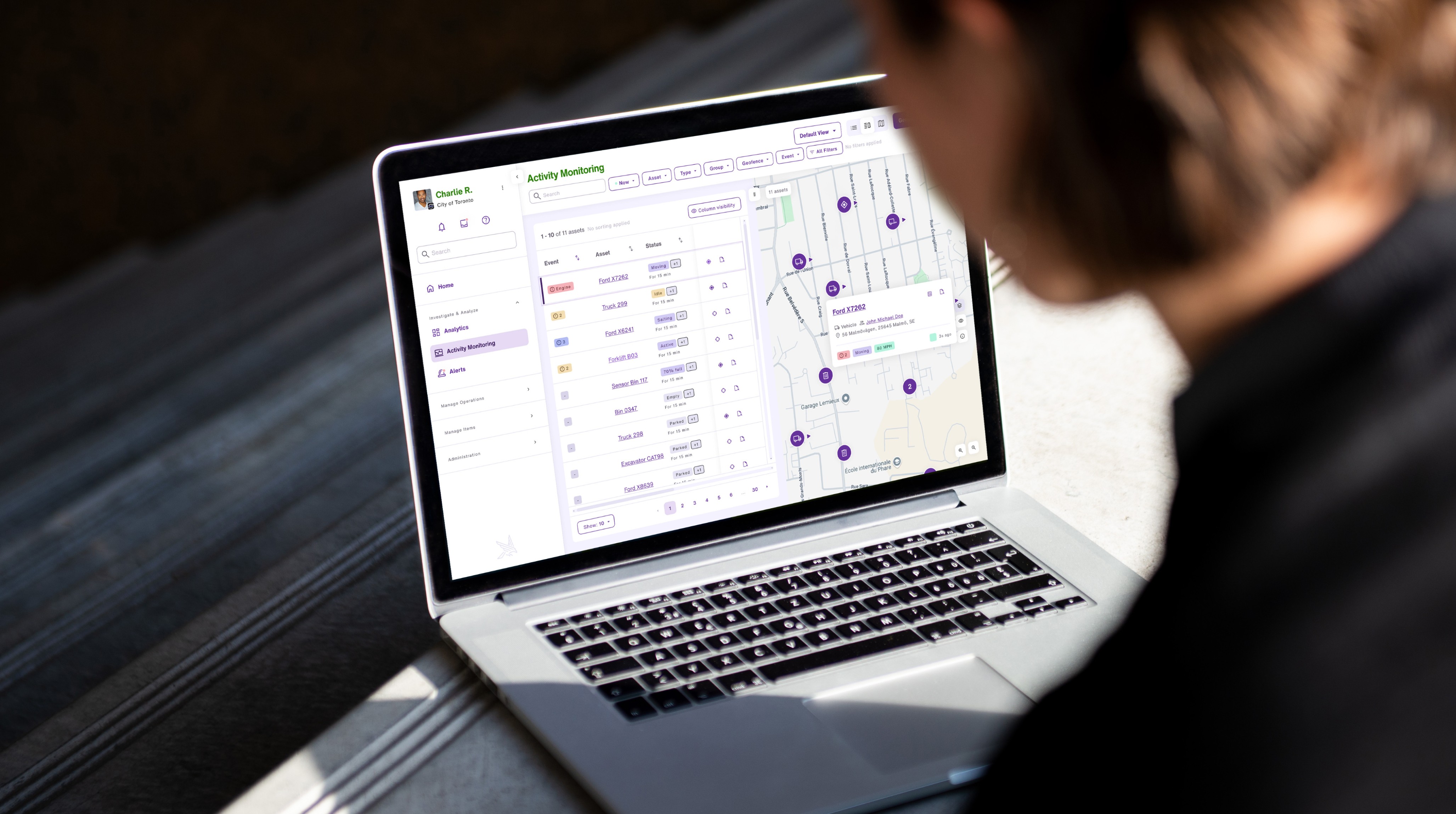
Business Challenge
Losing Customers to Simpler Products
Fleet management software is used by municipalities and private companies to track and manage thousands of assets (e.g. seasonal service vehicles, construction equipment, delivery trucks, etc.). These platforms offer role-based access for dozens of user types (e.g. fleet managers, drivers, workers, etc.) and help them have visibility across various operations, comply with regulations, optimize their fleet and more.
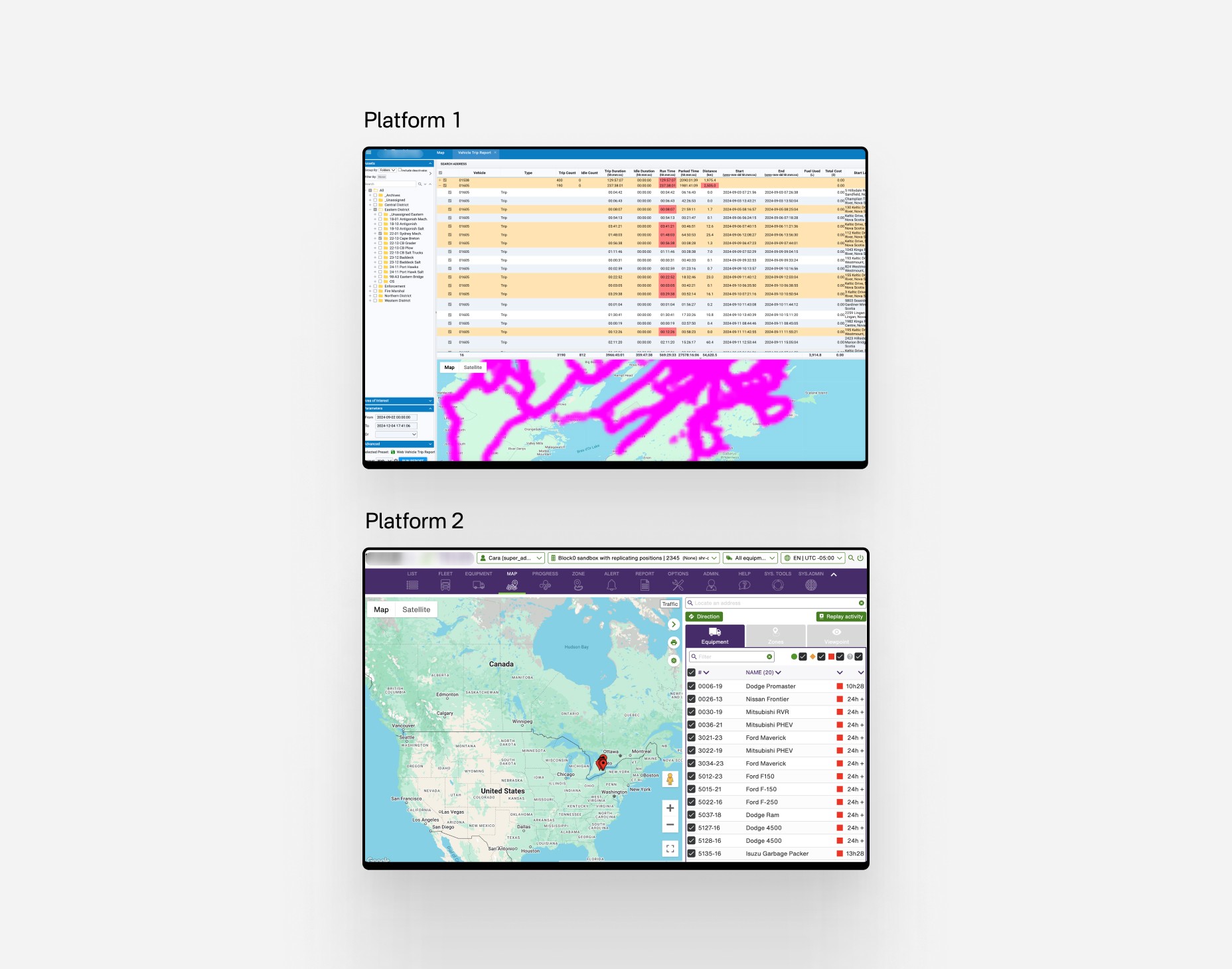
Despite offering two advanced, feature-rich products, our client found it increasingly hard to compete with newer, more user-friendly software — both in attracting new customers and keeping existing ones.
To turn things around, the company decided to consolidate the functionality of both platforms, streamline workflows of backend and product teams, and invite a design team to create one unified solution with a more easy-to-use, scalable and performant interface.
UI of the Two Platforms Before the Merge
Phase I: Foundational UX Strategy
Design Lead (4 months)
Leading the Design Process Towards the Merge Roadmap
As part of a three-person design team, I helped lay the foundation for merging the platforms by defining and facilitating key UX activities.
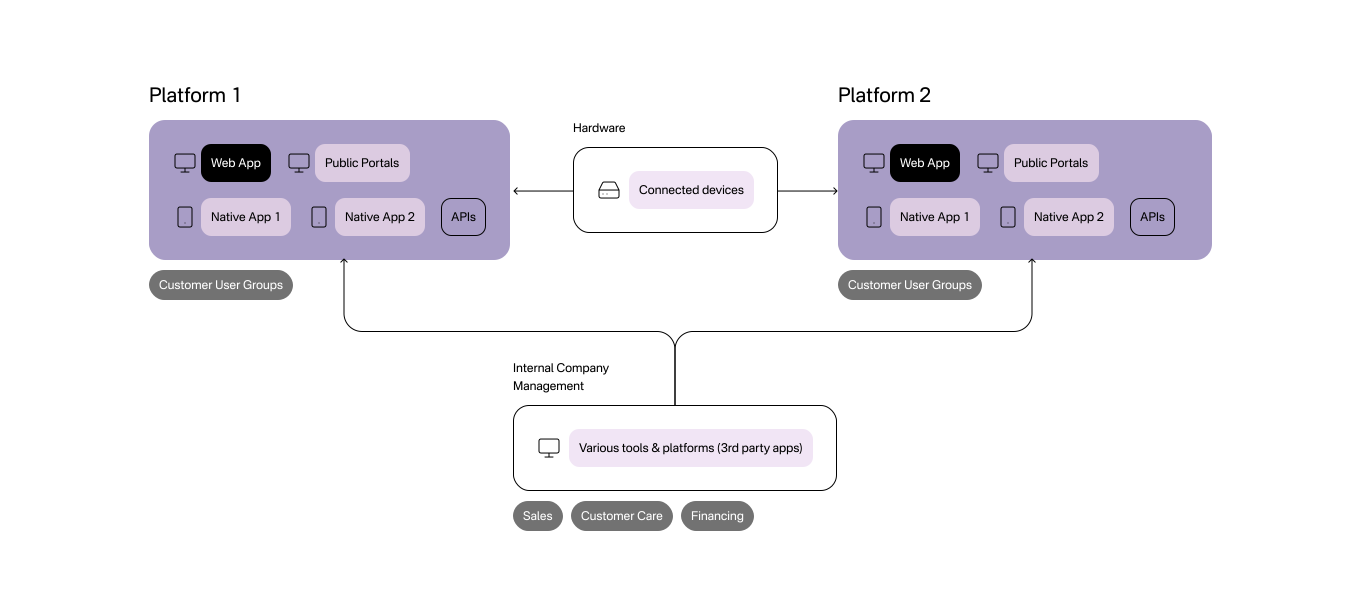
Before diving into specific UX workstreams, I first mapped the entire ecosystem of both platforms. Together with the client team, we prioritized which areas to focus on in the first phase. I continuously defined what foundation for the merge actually meant, what was the most useful outcome for the client, and selected the right UX methods and processes to deliver it.
Pre-merge Platforms' Ecosystem
UX Activities Summary
User Flow Mapping
Mapping of existing flows helped our team understand the complexity behind both platforms and to identify feature overlaps, gaps, and redundancies.
Heuristic Evaluation & Competitor Analysis
Compared legacy interfaces with modern competitors to highlight usability gaps and outdated UX patterns. This also helped us see how more successful products
address challenges of users and their workflows. Download full analysis here.
Establishing User-Oriented Processes
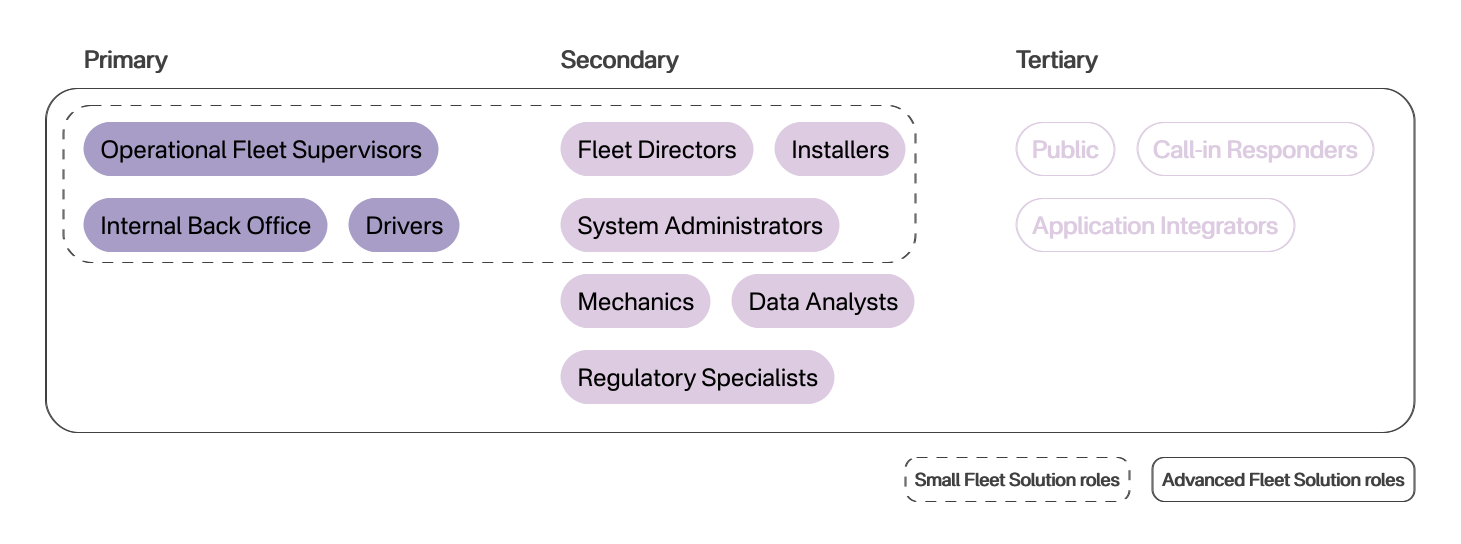
We interviewed customer-facing teams to consolidate feedback and define 12 user types with their jobs-to-be-done, pain points, frequency of usage, and decision weight. This helped us categorise users into primary, secondary, and tertiary groups for future MVP rollouts.
User Mapping & Categorisation
User Research
Out of 12 user types, operational fleet supervisors were chosen to be the priority group for the MVP. By interviewing and observing the work of 10 supervisors from both platforms, we mapped their core workflows that informed the navigation of the future platform. Then, we continuously improved the navigation by organising the tree testing sessions with said users.
Stakeholder Alignment
More than ten stakeholders across product, engineering, sales, and customer care had conflicting priorities. Our team facilitated weekly syncs and workshops, e.g. on product vision and feature prioritisation. I learned that one of the most useful alignment tools was having low-fidelity concepts of the MVP right before agreeing on the roadmap: it helped teams move away from abstract disagreements and ground discussions in tangible trade-offs.
Results
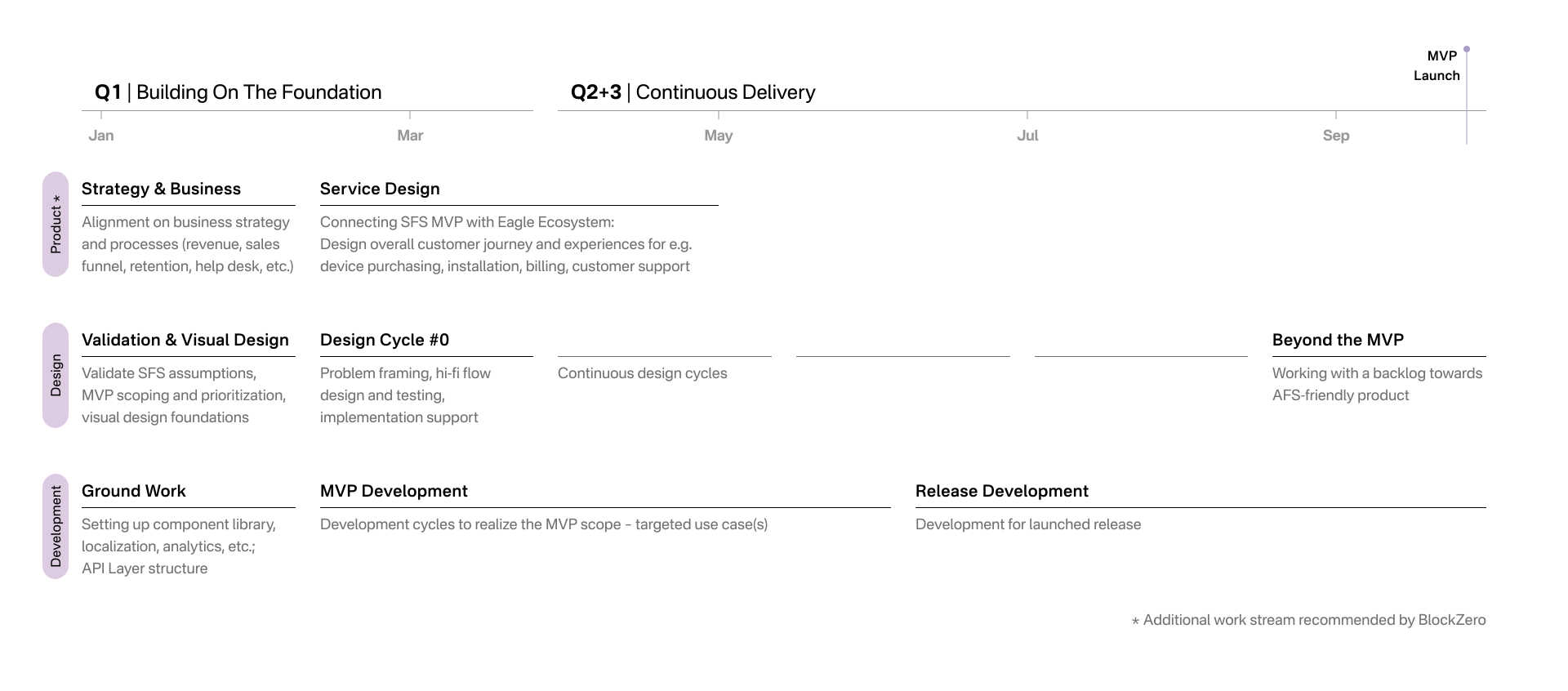
The outcome of our work was a comprehensive design report that aligned the organisation around a shared vision for the merged product. The report synthesised all research findings, user insights, workshops outcomes into clear strategic recommendations, a prioritized roadmap, and early design concepts illustrating the future platform. It became a reference point for decision-making across teams — guiding product planning, design direction, and stakeholder alignment as the project moved into the next phase.
MVP Roadmap —One of the Key Results From Phase 1
Phase II: Delivering the MVP
Product Designer (5 months)
MVP: Establishing Agile & Collaborative Process
Over the next five months, I was part of the design team of three and our focus was on executing the roadmap and preparing the MVP for launch. We introduced a structured & agile process: flows were broken into MVP-ready packages, prioritized by the product team, and translated by our design team into detailed designs before being implemented by engineers with our support. Each designer owned a core workflow.
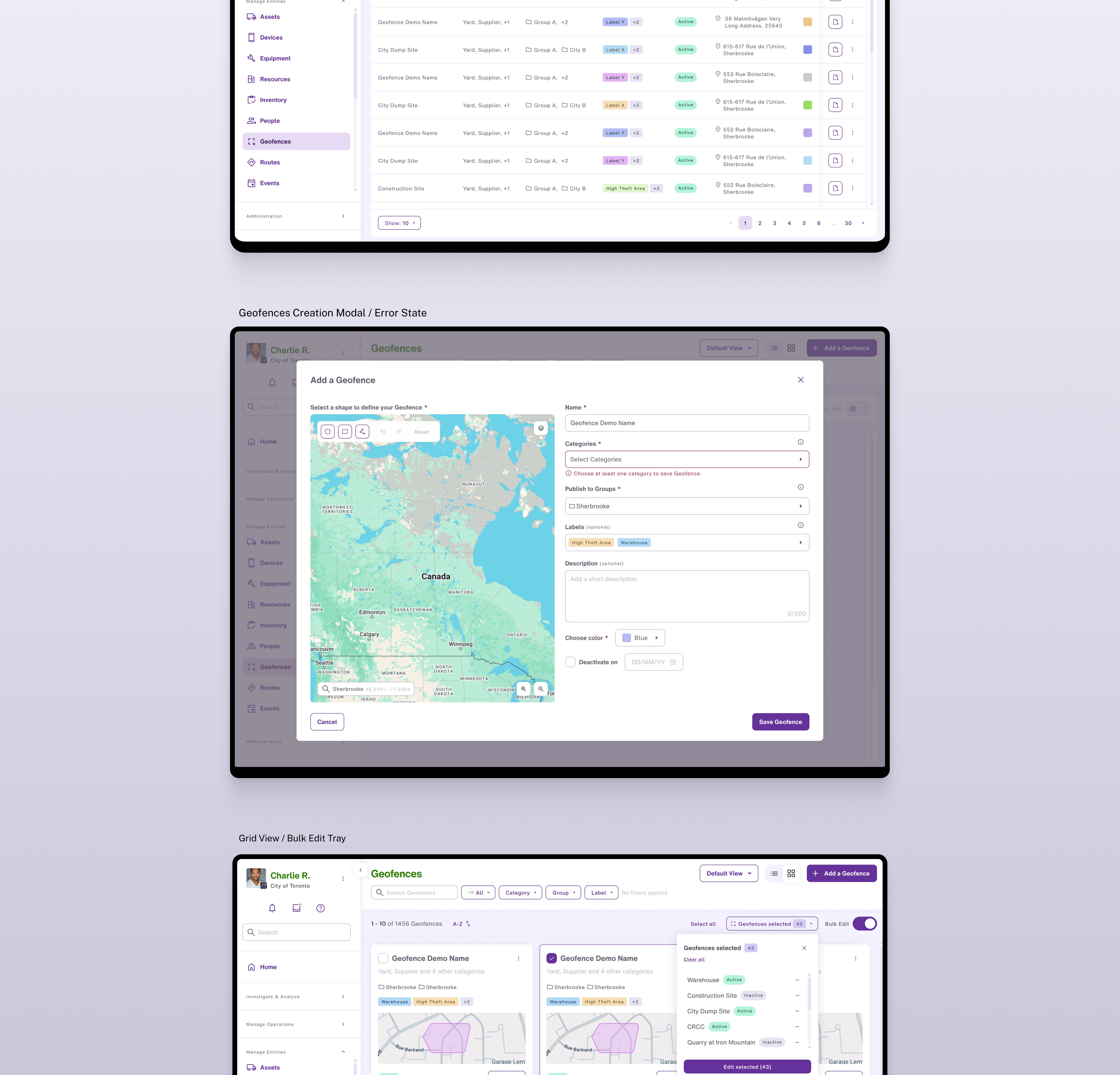
Example: Designing the Geofence Creation & Management Flow
One of my responsibilities was the flow of Geofence Creation & Management, a critical feature for the MVP. A geofence is a virtual boundary drawn around a real-world geographic area. This feature is used by the core user group, Operational Fleet Supervisors, on a daily basis to track and analyse vehicle operations, e.g. to detect unauthorized vehicle movement outside approved zones.
I started designing the flow with exploration based on the PRDs, iterated through reviews with the product owner, and together we refined requirements as questions appeared. With the design system evolving in parallel, I could build directly with components, or added new ones where needed. Once approved, the flow was documented and handed to the dev team, where I continued to support implementation and create more designs for the edge cases.
Geofence Creation & Management Designs
Design System Work
For a platform this complex, it was important to keep consistency and scalability in mind since the very first designs. We started building the design system early, trying to make it flexible enough to explore new flows but also strong enough to enforce standards.
Following WCAG accessibility guidelines and established UX best practices, the system covered UI foundations, components, interaction patterns, and documentation. It evolved continuously with the product to support usability, performance, and design consistency as the platform grew.
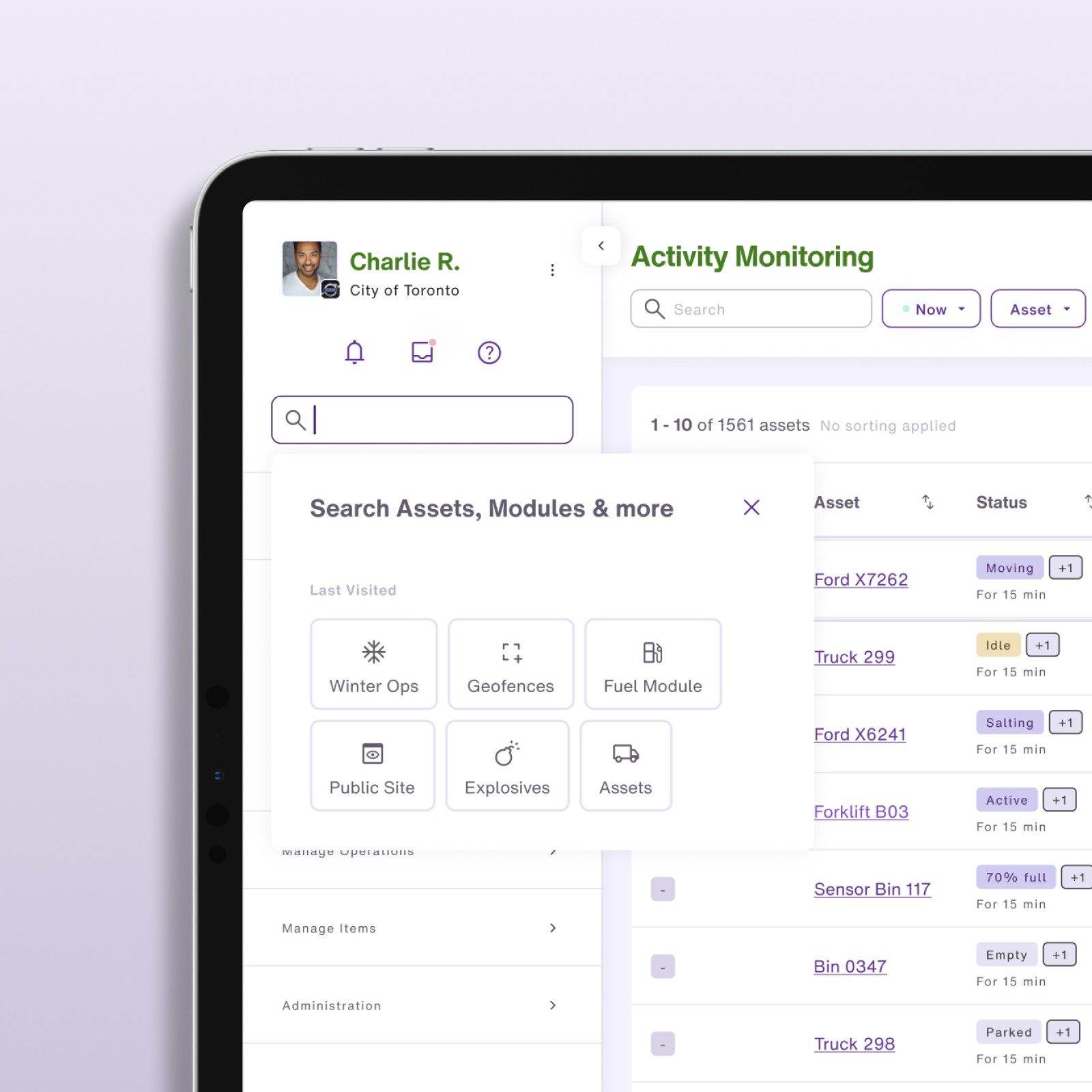
Search Field Component in Action
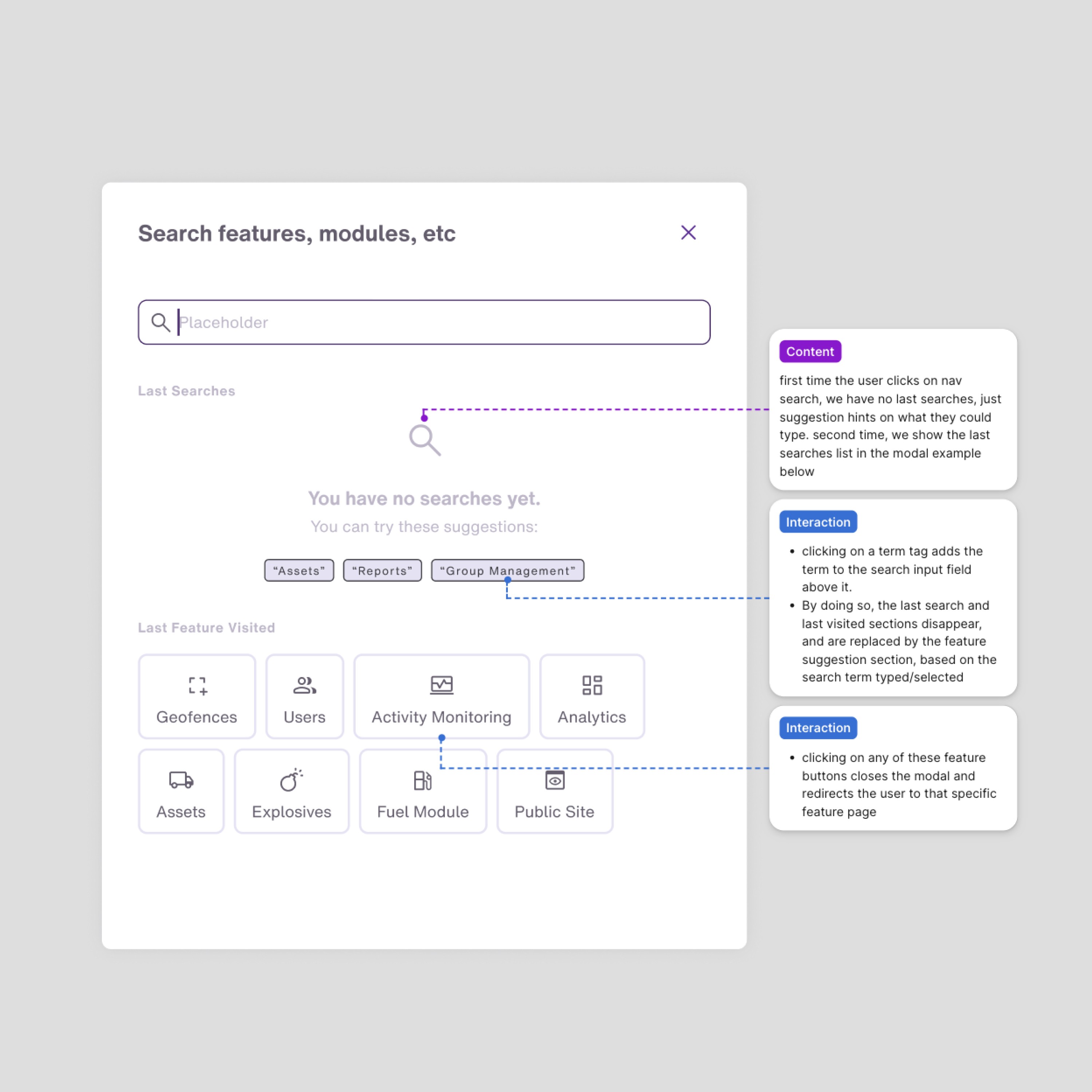
Search Field Component in Dev Handover
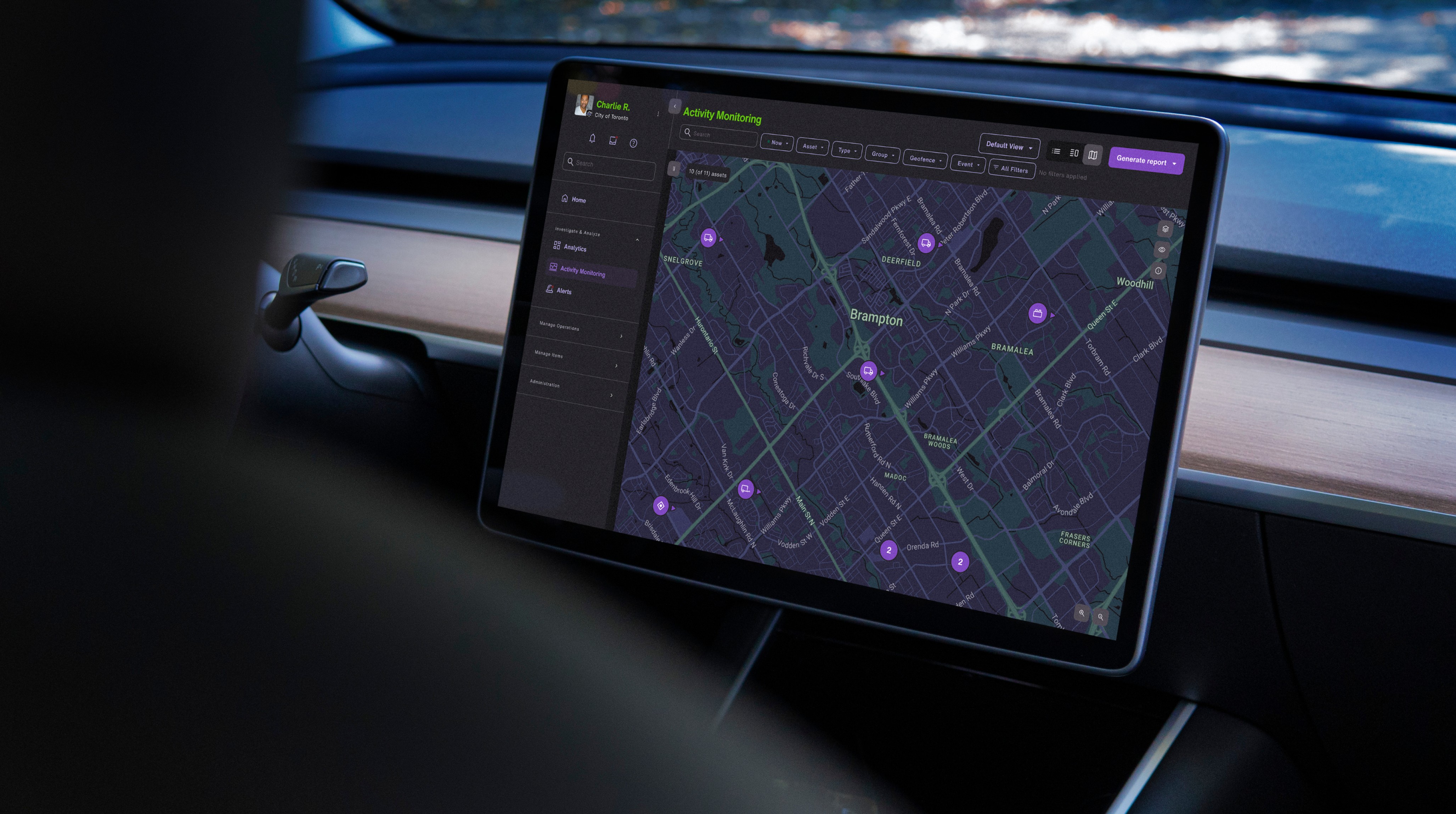
Activity Monitoring Prototype
Dark mode helps users stay safe on the road during night shifts
Result
Fleet Management MVP
In the end, we delivered the first MVP of the merged platform. By engaging all stakeholders and applying design thinking, we united two fragmented products into a modern, user-centred platform.
When our engagement concluded, the MVP design was complete, testing was about to begin, and a clear roadmap was in place. Although our team did not participate in the following phases, our work established a solid foundation and showcased the value of design in a complex enterprise environment.
Learnings
Balancing Leadership and Hands-On Design
The biggest challenge for me was working on three levels at once. At the top strategic level, it was about navigating complex stakeholder alignment with shifting priorities. At the internal team level, I translated those strategic discussions into concrete plans and kept our design work on track. And at the detail level, I stayed hands-on — from facilitating workshops and analysing research to designing concepts and prototypes.
In essence, I was learning to balance leading, collaborating, and doing, which was very demanding, but also rewarding. Being trusted to work with such a large client and such a complex platform was a rare opportunity.
Like What You See?
See More in Work & Blog